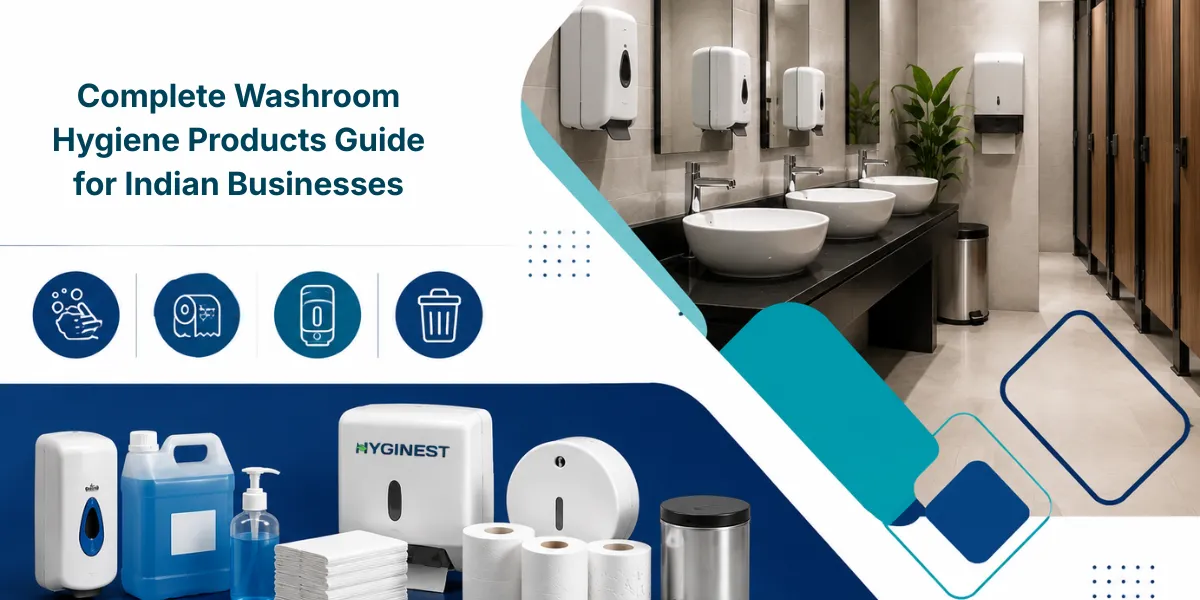
Indian businesses need at minimum five core washroom hygiene products to meet health, compliance, and staff welfare standards: a soap or sanitiser dispenser, a hand-drying solution, a sensor tap or automatic flusher, a toilet-paper dispenser, and a bin with a lid. Beyond these basics, the right combination depends on your industry, footfall, and applicable regulatory framework – from FSSAI food-safety rules to Schedule M under the Drugs and Cosmetics Act.
Quick Definition
Washroom hygiene products are dispensers, fixtures, and equipment installed in commercial restrooms to prevent the spread of pathogens, control odour, and support regulatory compliance. They operate at the point of hand contact – taps, soap, drying, and flushing – where cross-contamination risk is highest. For Indian businesses, selecting the correct product tier directly affects audit readiness and employee health outcomes.
What Are the Core Washroom Hygiene Products Every Indian Business Needs?
Every commercial washroom – regardless of industry – requires six product categories to function safely. Missing any one of them creates a contamination gap that auditors, employees, and customers will notice.
You can browse the full range of washroom hygiene products by category to match your facility type. The six essentials are: soap or sanitiser dispensers, hand dryers or paper dispensers, sensor taps, urinal and WC flushers, washroom bins, and an air care or odour-control unit.
Which Soap Dispenser Type Is Right for a Commercial Washroom?
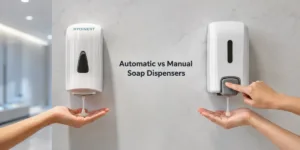
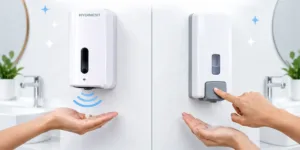
Touchless automatic soap dispensers reduce bacterial hand contamination by up to 47% compared to bar soap, per a 2021 study published in the American Journal of Infection Control (September 2021). For Indian business washrooms, touchless dispensers are the standard in food processing, pharma, and healthcare – and increasingly expected in hospitality and corporate settings.
The choice between foam, liquid, and gel formats matters for cost and compliance. Foam dispensers use roughly 60% less soap per dose than liquid units, which reduces refill frequency in high-traffic washrooms. Wall-mounted automatic soap dispensers with 500ml–1000ml cartridges suit most Indian office and factory washrooms. Look for dispensers with a drip-tray and lockable refill cap – both are standard on commercial-grade units.
| Dispenser Type | Best For | Dose/Use | Compliance Fit |
|---|---|---|---|
| Foam (touchless) | Offices, Hospitality | 0.4 ml | FSSAI, ISO 22000 |
| Liquid (touchless) | Pharma, Healthcare | 1.0–1.2 ml | Schedule M, GMP |
| Gel (manual pump) | Small offices, low footfall | 1.5 ml | General use |
| Sanitiser (touchless) | Entrance, high-traffic | 1.0 ml | WHO hand-hygiene guidelines |
Hand Dryer vs. Paper Towel Dispenser: Which Should Indian Facilities Choose?
High-speed jet electric hand dryers dry hands in 8–12 seconds and eliminate paper waste entirely. Paper towel dispensers dry hands in under 15 seconds and remove the aerosol concern some infection-control protocols flag against air-powered units. Neither option is universally superior – the right choice depends on your sector, footfall, and budget.
In Hyginest’s supply work across pharma and food-processing clients, paper-towel dispensers remain the default in GMP environments because they produce no airflow that could displace airborne particles. High-speed hand dryers are the better fit for corporate lobbies, retail washrooms, and hospitality settings, where sustainability goals and maintenance reduction matter more than cleanroom-grade air control.
| Criterion | High-Speed Dryer | Paper Towel Dispenser |
|---|---|---|
| Capital cost | ₹4,000–₹18,000+ | ₹800–₹3,500 |
| Running cost | Power only | Ongoing paper rolls |
| Drying time | 8–12 seconds | 10–15 seconds |
| GMP / pharma use | Generally avoided | Preferred standard |
| Sustainability | Zero paper waste | Paper waste generated |
| Maintenance | Annual servicing | Refill-only |
Why Do Sensor Taps Reduce Water Waste in Indian Commercial Washrooms?
Sensor taps cut water consumption by 30–50% compared to manual taps, according to data published by the Ministry of Jal Shakti, Government of India (2023). The mechanism is simple: water flows only while hands are present under the sensor. Manual taps are frequently left running or not fully closed, which adds up to significant daily water waste in high-footfall washrooms.
For Indian businesses, sensor taps also address a compliance gap. Under the BIS guidelines for smart building fixtures, sensor-operated fittings are recommended in any facility serving more than 50 users per day. They eliminate the most common touchpoint in a washroom – the tap handle – which reduces cross-contamination risk without relying on user behaviour.
What Are Urinal Sensors and Automatic Flushers – and Do Indian Businesses Need Them?
Automatic urinal and WC flushers activate after each use via an infrared sensor, removing the need for manual handle contact. Unflushed urinals are the single largest source of washroom odour complaints in Indian commercial facilities, particularly in warm climates where ammonia build-up accelerates rapidly.
In Hyginest’s experience supplying to restaurant chains and manufacturing plants across Gujarat, automatic flushers reduce maintenance call-outs for odour-related complaints by a significant margin. They also support water management – most sensor flush valves are pre-set to release 1.5–3 litres per flush versus the 6–9 litres a standard manual valve delivers.
How Should a Business Set Up Washroom Hygiene Products for Regulatory Compliance?
Setting up a compliant washroom in India requires matching product choices to the applicable regulatory framework. FSSAI-licensed food businesses must follow Schedule 4 of the Food Safety and Standards (Licensing and Registration) Regulations, 2011, which mandates handwashing stations, soap supply, and hygienic drying at every production washroom.
- Audit your applicable standard: FSSAI Schedule 4, Schedule M (pharma), NABH (healthcare), or general Factories Act (manufacturing). Each sets specific requirements for soap, drying, and flushing.
- Map washroom footfall: Divide daily users by 10 to estimate how many dispenser refills per week are needed. Facilities with 100+ daily users require auto-dispensing to remain consistently stocked.
- Install touchless at every primary contact point: Tap, soap, flusher, and bin lid. Manual contact at any one of these breaks the chain of touchless hygiene.
- Place hand sanitiser dispensers at washroom exits: A dedicated hand sanitizer dispenser at the exit reinforces clean-hand protocol after the washroom itself.
- Create a refill and maintenance log: Auditors under FSSAI and GMP frameworks check maintenance records, not just equipment presence. A paper or digital log per unit is non-negotiable.
What Is a Washroom Panel and When Does a Business Need One?
A washroom panel is a single modular unit that combines soap dispenser, paper dispenser, hand dryer, and sometimes a mirror or bin holder into one wall-mounted structure. It consolidates four individual product positions into one fixture, which reduces installation cost and creates a cleaner visual layout.
Washroom panels suit facilities that are renovating or fitting out fresh, where wall drilling can be planned in a single phase. For businesses retrofitting existing washrooms, individual units are often more practical because they can be mounted around existing plumbing and tile patterns without major disruption.
How Do You Choose Washroom Hygiene Products for High-Footfall Indian Facilities?
High-footfall facilities – shopping malls, hospitals, airports, large factories – need commercial-grade specifications that standard domestic products cannot handle. The key metrics are: cycles per day, refill capacity, motor or sensor lifespan, and ease of maintenance by non-technical staff. Stainless steel SS-304 construction is the preferred material for high-use environments in India. It resists the humidity, cleaning chemicals, and physical wear that plastic-bodied units cannot sustain at volume. In healthcare and pharma, SS-304 is effectively a requirement rather than an option – it supports the chemical disinfection protocols those sectors run daily.
Frequently Asked Questions
What washroom hygiene products are mandatory for FSSAI-licensed food businesses in India?
FSSAI Schedule 4 requires handwashing facilities with soap or detergent, clean running water, and hygienic drying (paper towels or a clean-air dryer) at every production washroom. Automatic flushers are recommended but not explicitly mandated. A maintenance log for each hygiene station is required for Level 3 audits and above.
What is the difference between a soap dispenser and a sanitiser dispenser?
A soap dispenser delivers a measured amount of soap that requires water rinsing to remove dirt and bacteria. A sanitiser dispenser delivers an alcohol-based gel or liquid that kills pathogens on contact without rinsing. Both are needed in compliant commercial washrooms – soap at sinks, sanitiser at exits or entry points.
How often should commercial washroom dispensers be refilled in Indian offices?
A 1000ml soap dispenser set at 1.2ml per dose lasts approximately 833 uses before refill. For an office washroom used by 200 employees daily, with an average of 3 handwashes per person, a 1000ml cartridge requires refilling every 1–2 days. Larger 1500ml cartridges or wall-mount dispensers with dual-cartridge designs extend intervals to 3–4 days.
Are sensor taps and auto-flushers energy-intensive for Indian businesses?
No. Most commercial sensor taps and automatic flushers in the Indian market operate on 4–6 AA batteries that last 12–24 months under normal use, or on a DC adapter drawing under 5W. The water saving – 30–50% per fixture – far exceeds the energy cost of the sensor mechanism, making the total operating cost lower than a manual tap in most use cases.
Can a small business or SME afford commercial washroom hygiene products?
Yes. Entry-level commercial-grade soap dispensers start at under ₹1,500, sensor taps from ₹2,500, and paper dispensers from ₹800. A fully touchless four-point washroom setup (tap, soap, dryer, flusher) is achievable for ₹12,000–₹25,000 for a single washroom, depending on specification. Hyginest supplies to MSME-scale clients and provides pan-India delivery with ready stock.
What is the life expectancy of a commercial hand dryer in India?
A quality commercial hand dryer rated for 50,000–100,000 cycles has a practical lifespan of 7–10 years in a 200-user-per-day washroom. Motor-brushless high-speed units last longer than brush-motor models. Annual servicing – filter clean and motor inspection – is the primary maintenance requirement to achieve rated lifespan.
The Bottom Line on Washroom Hygiene for Indian Businesses
A compliant, well-equipped commercial washroom protects employee health, supports audit readiness, and signals to clients and visitors that your business takes hygiene seriously. The six core products – soap dispenser, hand dryer or paper dispenser, sensor tap, automatic flusher, air care unit, and covered bin – form the non-negotiable base.
Beyond the base, your industry standard determines the specification level. Pharma and food businesses need SS-304 construction and GMP-compatible materials. Hospitality and corporate offices can opt for design-forward ABS and chrome units. The key insight: buy for your peak-use day, not your average day. A dispenser that runs out during a high-footfall shift creates a compliance gap that a ₹2,000 upgrade could have prevented permanently.
Start by auditing your current washroom against the five-category checklist in this guide. Then speak to a hygiene specialist who can match products to your floor plan, footfall, and applicable regulatory framework.